
The student pilot field guide · 17 min read
How to Compare Flight Schools in Mesa: 8 Questions to Ask
A detailed guide to choosing a Mesa flight school: compare training paths, realistic costs, schedules, instructors, aircraft, safety practices, and career claims before you enroll.
In this guide
Choosing a flight school means choosing the people, aircraft, and routine behind your first lessons. Can you book consistently, understand your bills, ask questions comfortably, and see your progress? Bring these eight questions to every school, including Venture West. Use your actual availability and flying goals, then compare written answers.
Read straight through, or choose the sections you need. Optional questions add guidance for your situation. The core guide stays available to everyone.
01 / 08
Which training path fits my goal?
Start with an ordinary sentence: I want to fly for personal travel, I want to explore a flying career, or I already have a certificate and want to continue. These lead to different conversations. Ask the school to write down the certificate or rating you would work toward first, what comes after it, and where the quoted program ends. A private pilot course and a career package are not comparable purchases just because both begin in a small airplane.
You will hear Part 61 and Part 141. These refer to different regulatory training structures. A Part 141 school uses an FAA-approved course with required organizational and curriculum standards. Part 61 training can also follow a carefully structured syllabus, while allowing the instructor to organize training around the applicable certificate requirements. The useful question is not simply which label a school has. It is which course you would actually enter and how that course would work for you.
Be careful with minimum-hour advertising. For a typical airplane single-engine private pilot applicant under Part 61, section 61.109 specifies at least 40 hours of flight time, with detailed requirements within that total. An approved Part 141 airplane private pilot course can have a 35-hour minimum. Those are regulatory starting points, not a promise that a student will be ready at that hour. Ask for the planning assumptions behind your estimate instead of choosing by the smallest number.
Ask to see the syllabus before committing. It should show the progression from basic aircraft control to independent planning and practical-test preparation. You do not need to understand every term immediately. You should be able to point to a lesson and ask what you would learn, how readiness is judged, and what happens next.
If you have previous training, bring your logbook and describe how recently you flew. Ask how prior experience will be reviewed, whether an assessment flight is needed, and how any credit will be documented. Do not assume that transferring schools automatically transfers every course requirement or eliminates refresher training. Your comparison should reflect your starting point today, not the starting point of a brand-new student or the most experienced person in an advertisement.
- Ask: Which certificate or rating does this written quote actually take me through?
- Ask: Which parts of the plan change if I train around a full-time job?
- Request: The course outline, entry requirements, and any proposed credit for previous experience.
Read the source: FAA — Pilot Schools Information · FAA — Part 141 Pilot Schools · 14 CFR 61.109 — Private pilot aeronautical experience · 14 CFR Part 141, Appendix B — Private pilot certification course
02 / 08
What does the full training estimate include?
Ask for a worksheet you can read line by line, not just a package total. Aircraft rental, instructor time in flight, ground instruction, training-device sessions, learning materials, and tests should be identifiable. Have the school mark each item as included, estimated, or paid separately. Then ask what number of hours or sessions sits behind each amount. You cannot meaningfully compare a complete estimate with another quote that leaves several necessary costs outside the headline price.
Clarify how aircraft time is charged. A wet rental rate generally includes fuel; a dry rate excludes it. Ask about fuel surcharges and reimbursement rules rather than relying on the label alone. Also ask whether billing uses a Hobbs meter, tach time, or another method, and what starts and stops the charge. A two-hour appointment is not necessarily two billed aircraft hours or two billed instructor hours. Request a sample lesson invoice with personal details removed.
The idea, at a glance
The hourly rate is only one part of the total
- In the airplane
Aircraft time and flight instruction.
- Around the lesson
Ground teaching, equipment, and study.
- Through completion
Tests, additional training, and living costs.
Ground instruction deserves its own discussion. Briefing a lesson, planning a cross-country flight, reviewing weather, and debriefing afterward all support learning; ask how that time is billed. For testing, separate the knowledge-test fee, examiner fee, aircraft rental during the practical test, and any preparation or retest expense. Ask about medical-certificate appointment costs, required equipment, subscriptions, renter insurance, airport fees, and taxes where applicable. These are questions for the written quote, not assumptions that every school charges every item.
Keep training cost and borrowing cost on separate lines. If financing is involved, compare the amount borrowed, APR, fees, repayment term, payment start date, and total scheduled repayment. APR includes interest and certain borrowing charges, so it provides information that an interest rate alone does not. Ask whether interest accrues while payments are deferred and whether unpaid interest may be added to the balance. Use the lender's actual disclosures; a school's monthly-payment illustration is not your final loan offer.
Make three budgets: the school's written estimate, an additional-training scenario using its actual extra-lesson rates, and a slower-completion scenario including your own living and travel expenses. Exploring financing does not mean you are unqualified or uncommitted; it means you need clear options and terms. The question is whether your plan leaves room to keep learning if the original schedule changes, without relying on hoped-for future flying wages.
- Request: Quantity, rate, subtotal, and included-or-extra status for every quoted item.
- Ask: What will one representative lesson cost from briefing through debriefing?
- Ask: Which rates can change after enrollment, and how will I be notified?
- Keep: Your training estimate, school payment agreement, and lender documents as separate records.
Read the source: CFPB — The difference between interest rate and APR · CFPB — Private education loan disclosure contents · CFPB — Private student loan deferment and forbearance · Pavco Flight Center — Example of published wet-rate and meter billing terms · DuBois Aviation — Published rental terminology
03 / 08
What happens if I need more training?
Ask this before enrollment, while there is no disagreement to resolve. Learning is not always a straight line. You might need more practice with a skill, return after an interruption, or find that your study routine needs changing. Ask who notices a delay, who discusses it with you, and when the financial estimate is revisited. The goal is a clear process for deciding what to do next, not a promise that extra training will never be necessary.
Request an example without another student's private information. When someone repeats a lesson, does the instructor identify the skill, explain the standard, and set a focused plan? Can a senior instructor offer a second perspective, and does that review cost extra? You should understand both what the additional training aims to achieve and how its success will be evaluated.
Read any extra-training, completion, or checkride promise closely. Which courses and students qualify? Does it cover the airplane, the instructor, the examiner, or only one of those? Are there attendance, study, payment, or completion-time conditions? Is there a maximum benefit? Request the current policy in writing. A friendly explanation during a tour is useful, but it should match the agreement you are being asked to sign.
Separate a cancelled lesson from an unsuccessful practical test. Ask about the school's cancellation deadline, weather decisions, maintenance cancellations, instructor absences, and student illness. Then ask separately about examiner rescheduling, an interrupted test, additional preparation, and a retest. Find out which organization sets each charge. This prevents an assumption that a school's training package automatically controls an independent examiner's availability or fees.
Finally, walk through a pause or withdrawal before one becomes urgent. Ask how unused funds are calculated, whether prepaid discounts affect refunds, how refunds are requested, and how quickly records can be provided. Ask whether rates or course requirements change when you return. If a loan funds training, request the lender's separate explanation of what happens when training pauses or ends. Leaving a course does not, by itself, settle the payment obligations in a borrowing agreement.
- Ask: At what point do we review both my progress and my remaining budget?
- Request: Written cancellation, withdrawal, refund, and extra-training policies.
- Ask: Can I receive an itemized account balance and copies of my training records?
Read the source: FAA Aviation Instructor's Handbook — Chapter 6, Assessment · CFPB — Private education loan disclosure contents · CFPB — Private student loan deferment and forbearance · 14 CFR 141.101 — Training records
04 / 08
Can the schedule work with my real week?
Bring your calendar, including the commitments you cannot move. Give the school your real availability instead of saying you are flexible when you only have one free evening. Ask someone to build a sample training week around that calendar. Include travel, preparation, briefing, flying, debriefing, and study between lessons. The FAA recommends regular, frequent training to support retention; the right schedule is one you can actually sustain.
Ask to see representative availability for the aircraft and instructors you would use, with other students' names hidden. A school's opening hours are not the same as available lesson slots. Ask how far ahead students book, whether recurring reservations are possible, how waitlists work, and what happens when your usual instructor or airplane is unavailable. Find out who helps rebuild your schedule after several cancellations instead of leaving you to start over each week.
The idea, at a glance
Check the schedule before you commit
- Your availability
Include travel, work, family, and study.
- School capacity
Instructor, aircraft, and backup options.
- A workable rhythm
Regular lessons with room for interruptions.
Mesa's weather belongs in this conversation. Heat can reduce aircraft performance, and conditions can change what is appropriate for a particular lesson. Ask how the school schedules during hotter periods, plans around changing weather, and replaces an unsuitable flight with useful ground preparation when appropriate. A productive ground lesson is different from sitting at the airport waiting indefinitely. Ask how the decision is communicated and how any replacement lesson is charged.
Falcon Field has fixed-wing and helicopter training activity. Ask how instructors introduce local radio work, traffic awareness, and airport procedures to beginners. Discuss the airport's Fly Friendly guidance and its relationship to safe operations. Look for thoughtful local orientation, rather than a claim that a busy airport or a quieter airport automatically makes every student a better pilot.
Treat the advertised completion period as a scenario to examine. Ask which weekly lesson frequency it assumes, how much independent preparation is expected, and what availability is assumed for stage checks and practical tests. Have the school distinguish instructional time from waiting time. If you are comparing an accelerated option with part-time training, write down what you would need to change at work and at home to support each one. A short timeline has value only when its demands fit your life.
- Request: A sample week using the lesson times you can actually attend.
- Ask: What is the recovery plan after weather, maintenance, or instructor cancellations?
- Ask: Who schedules progress checks and practical tests, and when does that planning begin?
Read the source: FAA — Pilot Schools Information · FAA Aeronautical Information Publication — Potential Flight Hazards · FAA — Falcon Field runway-safety information · City of Mesa / Falcon Field Airport — Fly Friendly and noise guidance
05 / 08
Who will teach me and track my progress?
Meet a person who could actually teach you. Ask how instructors are assigned, whether you usually stay with one, and how students request a change if the teaching relationship is not working. Instructor credentials matter, but you are also evaluating communication. Explain something you do not understand and notice the response. You should be able to ask a basic question without being made to feel that you are slowing everyone down.
Ask the instructor to describe a normal lesson from start to finish. What should you prepare? What will be briefed before the flight? How will you know what went well and what still needs practice? The FAA's assessment guidance emphasizes useful feedback rather than merely pointing out mistakes. Ask to see a blank or fictional progress record. Look for a specific next step, not only a number, a grade, or the word satisfactory.
A syllabus and the FAA Airman Certification Standards serve different purposes. The syllabus organizes your learning; the standards describe the knowledge, risk management, and skills evaluated for certification. Ask how the school connects the two as you progress. That makes a review flight easier to understand: it is a check on your ability to make and carry out sound decisions, not simply another chance to accumulate hours.
Instructor continuity needs a backup plan. During illness, vacation, or a departure, can the next instructor see your lesson history? Is there a handover briefing? Ask what familiarization may be needed and who explains added costs. A documented transition gives you something more dependable than having to retell your training history.
Keep your own access to records in the conversation. Required pilot experience is documented under section 61.51; a school's scheduling calendar is not a substitute for the appropriate logbook entries. Part 141 has additional school-record requirements, including making a student's training record available on request. Whatever the training structure, ask how you can regularly review entries, correct errors, obtain copies, and understand endorsements. Make record review part of learning, rather than discovering missing information just before a test.
- Ask: After a difficult lesson, what written feedback and study plan will I receive?
- Ask: Who can provide a second instructional opinion if my progress stalls?
- Request: A blank progress record and an explanation of the instructor handover process.
Read the source: FAA Aviation Instructor's Handbook — Chapter 6, Assessment · FAA — Private Pilot for Airplane Category Airman Certification Standards · 14 CFR 61.51 — Pilot logbooks · 14 CFR 141.101 — Training records
06 / 08
Which aircraft and ground resources will I use?
Ask to see the kind of airplane assigned to your course, rather than only the most impressive aircraft on the ramp. Discuss its controls, instruments, seating, and the training tasks you will complete in it. If it is appropriate and the school allows it, sit in the cockpit with an instructor and check whether you can see and reach comfortably. Ask what changes when a different aircraft is substituted and whether extra familiarization is expected.
Fleet size is only the start of an availability discussion. Ask how many aircraft are normally available for your course and how maintenance downtime is handled. Does the school move students to another suitable aircraft, change the lesson, or reschedule? Ask how students report a discrepancy and who determines whether an airplane can return to service. You are assessing whether the reporting process is clear and taken seriously, not trying to perform an aircraft inspection during a tour.
The idea, at a glance
Match each resource to a purpose
- Airplane
Availability, condition, and a suitable trainer.
- Ground course
Concepts that connect to the flight syllabus.
- Training device
Specific practice with clear learning goals.
Safety culture becomes visible through ordinary answers. Ask what happens if you are tired, uncomfortable with conditions, or concerned about the aircraft. Who can you speak to outside your assigned instructor? How are a cancellation and its charges handled? Notice whether questions produce a careful explanation or pressure to continue. A statement that safety comes first is a starting point; a clear process for speaking up is more informative.
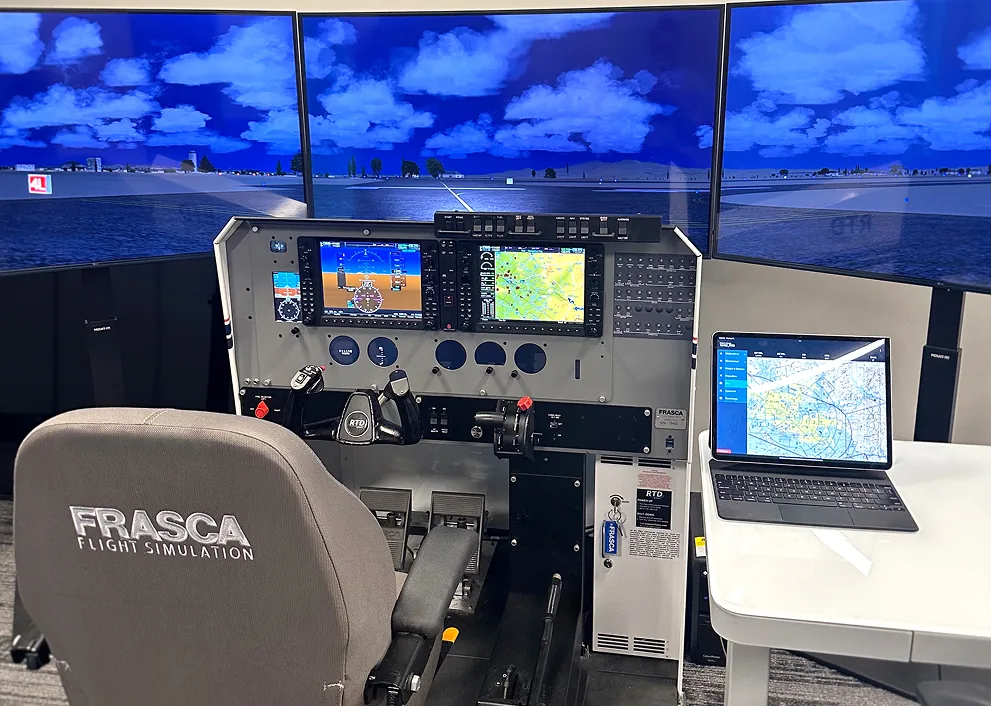
Look beyond the airplane. Where will you brief, study, and debrief? Is there somewhere quiet enough to think? What learning materials are used, and which subscriptions or devices are required? If a simulator or aviation training device is included, ask what it will teach and which hours, if any, receive regulatory credit. Credit depends on the applicable rules and the device's approval; a screen that looks like an airplane cockpit is not sufficient evidence.
Ask how ground practice connects with your actual training aircraft. A training device can help organize rehearsal, but an instructor must explain its differences and limits. Before buying a home simulator, headset, tablet, or software, request the equipment list. Distinguish required items from optional conveniences and ask what you can try or borrow.
- Request: The aircraft type, billing basis, and substitution policy for your course.
- Ask: How do I report an aircraft concern, and who responds?
- Ask: What exactly does the training device teach, and what credit is approved?
- Request: A required-equipment list before buying personal gear.
Read the source: FAA — Private Pilot for Airplane Category Airman Certification Standards · FAA AC 61-136B — Aviation training device approval and credit
07 / 08
What does the school mean by career support?
If your goal is professional flying, ask for a career conversation that continues beyond the last certificate in the package. Which qualifications will you hold on graduation? What experience would you still need for the next role you are considering? A training course, an instructor position, an airline pathway, and an airline job are different things. Ask the school to identify which of those it provides directly and which require another application or selection process.
Airline transport pilot certification has its own experience and other requirements. Section 61.159 sets a general 1,500-hour total-time requirement for an airplane ATP, while specific restricted-privileges pathways are addressed separately. A commercial pilot certificate alone is not the same as meeting airline hiring requirements. For school selection, you do not need to map every possible exception yourself. Ask the school to explain the route relevant to your circumstances and identify which parts are outside its control.
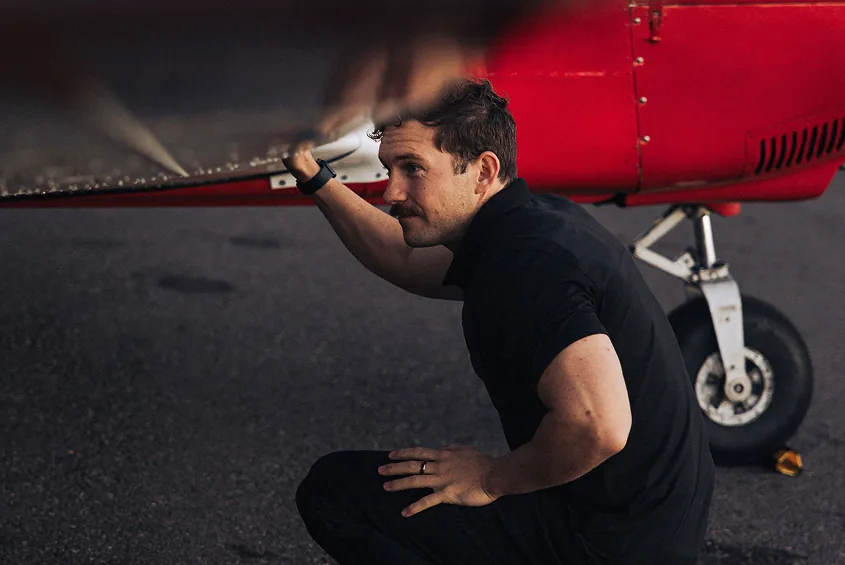
If an instructor opportunity is mentioned, ask whether it is an interview opportunity, a conditional offer, or an available job. Request the selection criteria, timing, and current written terms. Ask how work availability and pay are described and what happens if no position is open when you finish. If a partner or pathway program is named, confirm its current relationship and eligibility rules with the partner as well as the school.
Give outcome statistics a denominator. If a school quotes a completion, first-attempt pass, or placement rate, ask who was counted, over what period, and how students who paused or withdrew were treated. Ask what placement means: any aviation employment, an instructor job, or a particular airline role. A graduate story can help you imagine the journey, but it cannot tell you how likely that result is for everyone who enrolled.
Ask to speak with a current student or recent graduate who has agreed to participate. Discuss scheduling, billing clarity, support during difficulties, and the transition after training. Compare their experience with the written program while remembering that individual results differ. Your choice should rest on a credible process, not a promise that someone else's career will become yours.
- Ask: What qualification does this course provide, and what comes afterward?
- Request: Current written terms for any instructor opportunity or partner pathway.
- Ask: How is this reported outcome defined, and which students are included?
Read the source: 14 CFR 61.159 — ATP airplane aeronautical experience · 14 CFR 61.160 — Restricted-privileges ATP experience pathways
08 / 08
What should I leave the first visit with?
Before leaving, collect a proposed training path, an itemized estimate, a sample schedule, the current policies, and a named person for follow-up questions. Write down the date of each quote. Ask how long it remains valid and which assumptions need confirming before enrollment. If an important answer is still missing, mark it as unanswered. A blank space in your comparison is more useful than filling it with a hopeful assumption.
Use a simple decision worksheet with one column per school and the same eight questions down the side. For each question, record the answer, the document supporting it, and any follow-up you still need. Keep your notes factual: available lesson times, the rate for extra instruction, or how records are shared. Replace vague impressions such as seemed organized with the specific thing you observed that created that impression.
The idea, at a glance
Leave a school visit with evidence
- Written estimate
Assumptions, inclusions, and terms.
- Practical schedule
Who teaches you and what is available.
- Open questions
What you still need to verify.
Decide your non-negotiables before assigning scores. Perhaps you must train before work, need a clearly defined payment schedule, or want a straightforward way to change instructors. A school that cannot meet one of those needs may be a poor fit even if other features are attractive. If you use a one-to-five score, write the reason beside it and give your most important factors more weight. Do not let a good overall score erase an unanswered safety or contract concern.
A discovery flight can make the comparison more concrete. Before booking, confirm the current price, total appointment length, expected flight portion, what is included, where to meet, and the cancellation policy. Explain that you are considering training and want time for questions. Afterward, reflect on the briefing and communication as well as the flight itself. Enjoying the view is a good beginning; understanding how you would learn is the information you need for choosing a school.
At Venture West, bring this checklist when discussing your plans with admissions at Falcon Field. Ask for the relevant program and current tuition in writing. You do not need every career decision settled or an enrollment decision made during the tour. Aim for a school you understand, a schedule you can keep, and a realistic first stage of training.
- Training: My starting point, goal, course structure, and first milestone are written down.
- Cost: Included items, extra-training rates, payment timing, and refund terms are clear.
- Schedule: The actual lesson times and recovery plan fit my week.
- People: I know who teaches, reviews progress, and handles concerns.
- Decision: Remaining questions have an owner and a date for an answer.
Read the source: FAA — Pilot Schools Information
Common questions
Before you take the next step.
Is Part 141 automatically better than Part 61?
No. Compare the actual syllabus, instructor support, schedule, and complete cost for your goal. Part 141 uses approved courses and required school structures; Part 61 instruction can also be carefully organized.
Should I compare flight schools using the minimum advertised hours?
Minimum hours describe regulatory requirements, not your final bill. Ask what hours and progress assumptions support each estimate and what additional training would cost. You must also meet the required standards.
Can I compare schools without already knowing aviation terminology?
Yes. Bring your goal, schedule, and questions. Ask for unfamiliar terms to be explained through an example lesson or sample bill. Clear teaching during a visit is useful information.
What should I do before paying a large deposit?
Review the current course description, itemized estimate, extra-training rates, scheduling arrangements, and payment and refund policies. If borrowing, review the lender's separate terms. Resolve any answer that materially affects your ability to continue training before committing.
Keep learning offline
Make a plan you can use.
Print these guides, bring them to a school visit, or work through them with your instructor.
Your next step
Let’s talk about your training.
Choose any of the optional questions above to add context to your conversation with admissions.
Discuss my training planYour selections will be added to an editable contact form. Review them there; nothing is sent until you submit it.
Go deeper
Sources & further reading
Sources checked October 13, 2026. Requirements and provider terms can change. These guides prepare you for a conversation with your instructor; use current regulations, aircraft-specific information, and an appropriate briefing for a flight.
- FAA — Pilot Schools Information faa.gov
- FAA — Part 141 Pilot Schools faa.gov
- 14 CFR 61.109 — Private pilot aeronautical experience ecfr.gov
- 14 CFR Part 141, Appendix B — Private pilot certification course ecfr.gov
- CFPB — The difference between interest rate and APR consumerfinance.gov
- CFPB — Private education loan disclosure contents consumerfinance.gov
- CFPB — Private student loan deferment and forbearance consumerfinance.gov
- Pavco Flight Center — Example of published wet-rate and meter billing terms flypavco.com
- FAA Aviation Instructor's Handbook — Chapter 6, Assessment faa.gov
- FAA — Private Pilot for Airplane Category Airman Certification Standards faa.gov
- 14 CFR 61.51 — Pilot logbooks ecfr.gov
- 14 CFR 141.101 — Training records ecfr.gov
- FAA Aeronautical Information Publication — Potential Flight Hazards faa.gov
- FAA — Falcon Field runway-safety information faa.gov
- City of Mesa / Falcon Field Airport — Fly Friendly and noise guidance falconfieldairport.com
- FAA AC 61-136B — Aviation training device approval and credit faa.gov
- 14 CFR 61.159 — ATP airplane aeronautical experience ecfr.gov
- 14 CFR 61.160 — Restricted-privileges ATP experience pathways ecfr.gov
- DuBois Aviation — Published rental terminology duboisaviation.com