
The student pilot field guide · 17 min read
Before Your First Flight Lesson: A Student Pilot’s Complete Preparation Guide
A practical guide to starting airplane training: paperwork, medical planning, TSA requirements, study habits, lesson expectations, first solo and the private pilot checkride.
In this guide
You do not need to arrive at your first flight lesson knowing how to fly. You need a clear next step, time to learn, and an instructor who can turn a large goal into manageable lessons. The preparation that matters most happens around the flying: choosing a realistic schedule, organizing your documents, understanding medical requirements, and learning how to ask useful questions. This guide follows a beginning student working toward a U.S. private pilot certificate in a single-engine airplane. It explains what to arrange before day one and how those decisions carry forward into solo flying and the practical test. Other certificates and aircraft can have different requirements.
Read straight through, or choose the sections you need. Optional questions add guidance for your situation. The core guide stays available to everyone.
01 / 12
Choose a first milestone you can actually plan around
Start by describing the flying you want to do. Perhaps you want to travel with family, explore an airline career, or find out whether you enjoy handling an airplane. Those goals can share a first lesson while leading to different training plans. Write down your reason in ordinary language before comparing programs.
Then separate the big ambition from the next qualification. For a new private-airplane student, the broad sequence is instruction with an instructor, preparation for solo, further local and cross-country training, and the knowledge and practical tests. Your instructor decides the lesson order and when you are ready to move forward.
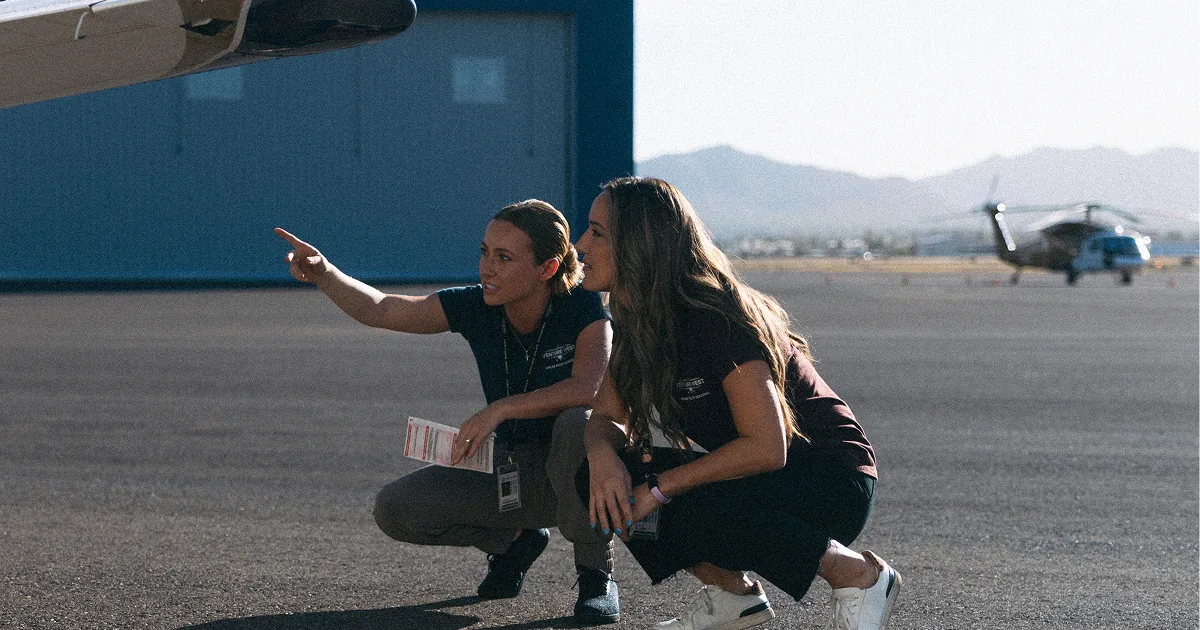
An introductory flight can help you evaluate the experience and meet the people who might teach you. Ask beforehand what the appointment includes, whether it contains instruction that can be logged, and how long to allow for the visit. A booking is a chance to learn about training; it does not commit you to a full program.
For career-minded students, ask for a written map showing where private training ends and later ratings begin. Becoming a private pilot is a substantial first achievement, but it is not airline qualification. Keeping the immediate milestone visible makes your next decisions simpler: which aircraft, which instructor, which schedule, and which preparation assignment?
- My reason for learning: personal flying, a career, or an initial exploration.
- My next milestone: a first lesson, a training start date, or completion of an existing certificate.
- My practical limits: available days, travel time, and the amount I can commit to training.
Read the source: FAA: Pilot Schools Information · 14 CFR §61.103: Private pilot eligibility · FAA: Beginning flight training
02 / 12
Understand the student certificate, medical and logbook
These are three different things. The student pilot certificate establishes your student-pilot status. Medical qualification addresses the health requirements for the operation. The logbook records instruction, experience and endorsements. Receiving one does not automatically complete the other two, and a school’s enrollment form does not replace an FAA application.
You can take ordinary dual flight lessons without first holding a student pilot certificate. Before airplane solo, however, you need the applicable certificate and other required qualifications. Airplane student-certificate eligibility starts at age 16 and includes the English-language requirement in §61.83; private-airplane certification requires at least age 17. Starting lessons and becoming eligible for a certificate are separate milestones.
The idea, at a glance
Different records do different jobs
- Student certificate
Required before airplane solo.
- Medical qualification
Separate from the student certificate.
- Training logbook
Lessons, experience, and endorsements.
Ask your instructor to help you begin the student application through IACRA, the FAA’s certification application system, and check the name and identifying information against your documents. Keep your own account credentials. Start the process early enough that paperwork is not the reason an otherwise prepared solo flight cannot take place.
Choose a logbook format with your instructor and review entries together. Required entries describe the lesson or flight, aircraft, time and relevant experience; training also needs the instructor’s certification. Ask what each column means before entering totals. Keep a backup of the records and endorsements, and correct discrepancies while the lesson is still easy to remember.
- Student certificate: coordinate the FAA application with your instructor.
- Medical qualification: arrange the appropriate pathway before solo.
- Logbook: keep accurate training entries, instructor signatures and endorsements together.
Read the source: FAA: Student pilot certificates · 14 CFR §61.83: Student pilot eligibility · 14 CFR §61.103: Private pilot eligibility · 14 CFR §61.51: Pilot logbooks
03 / 12
Address medical questions before making a large commitment
For a first-time student on the usual private-airplane path, plan to obtain an FAA medical certificate before solo; at least a third-class medical generally meets that stage’s requirement. A medical is not generally required just to receive instruction while your instructor acts as pilot in command. The FAA nevertheless recommends addressing it early, before significant training expense.
Your long-term goal also matters. If professional flying interests you, discuss the medical standards associated with that career with an Aviation Medical Examiner, or AME, before committing to a lengthy program. A first-class medical is associated with specified airline transport operations; it is not a universal legal prerequisite for someone’s first flight lesson.

If your history, medication or previous examination raises questions, contact an AME for an individual discussion about the process and supporting records. The FAA’s Know Before You Go guide explains how preparation can reduce missing-document delays. Complete required disclosures accurately. A school, an online forum and this article cannot determine your medical eligibility.
Do not stop treatment or change medication just to pursue flying; discuss care with your treating clinician and aviation eligibility with the AME. BasicMed and sport-pilot medical provisions have specific conditions and are not blanket substitutes for an initial private-training medical. For example, BasicMed includes a prior FAA-medical requirement. Ask which rules apply to your history and planned operation.
Read the source: 14 CFR §61.23: Medical certificate requirements · FAA: When a medical certificate is needed · FAA: AME Guide — Know Before You Go · FAA: Medical Certification
04 / 12
Confirm identity and flight-training security requirements
Ask the school which original documents to bring before scheduling the start of training. Under the current TSA Flight Training Security Program rules, providers must establish the relevant eligibility before providing covered flight training. U.S. citizens and U.S. nationals must present acceptable government-issued evidence of citizenship or nationality; an everyday photo ID alone may not establish that.
A candidate who is not a U.S. citizen or U.S. national generally needs a valid TSA Determination of Eligibility, unless an applicable exception such as the defined Department of Defense endorsement applies. The current system involves a security threat assessment and provider verification through the FTSP portal. Let the provider confirm the route that matches your circumstances.
The idea, at a glance
Confirm the enrollment paperwork
- Identity
Ask which documents are accepted.
- Security eligibility
Confirm the applicable TSA requirements.
- School records
Use the school’s approved submission method.
The determination can cover up to five years, but it may expire earlier, including when the candidate’s authorization to remain in the United States expires. It also does not eliminate the provider’s training-event obligations. Do not assume a receipt, an old approval, or a previous school’s enrollment means a new provider can start your lessons immediately.
Build these steps into your schedule, especially if you are arranging travel or a move. Ask who verifies completion and how you will be told that training can begin. Use the school’s designated document process and keep your own copies. This is also a good time to confirm payment, cancellation and any aircraft-rental requirements in writing.
Read the source: 49 CFR Part 1552: Flight Training Security Program · TSA: Flight Training Security Program portal
05 / 12
Budget for the training you need, not only the minimum
Under the usual Part 61 private single-engine airplane requirements, the minimum is 40 flight hours, including at least 20 hours of instruction and 10 hours of solo training, with additional specified experience within those totals. That number is an eligibility floor. It is not a promise that every student will be ready at 40 hours or a complete estimate of cost.
Request a written estimate that separates aircraft charges, instructor time, ground instruction, materials, equipment, medical examination and testing. Ask how additional training is billed and what assumptions underlie the quoted total. A useful estimate lets you answer a practical question: if I need several more lessons or have a weather delay, what happens next?
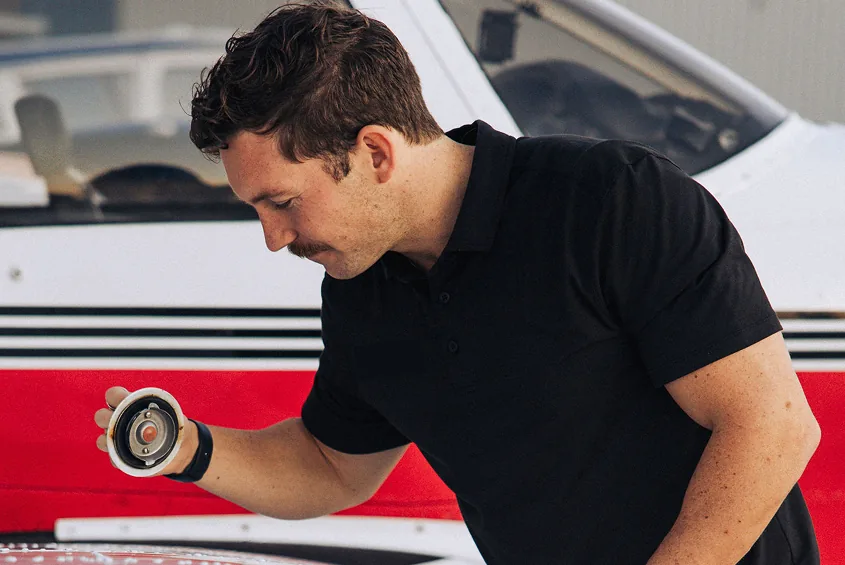
Protect enough time for the whole lesson. The calendar block may include a briefing, aircraft preparation, flying, a debrief and the trip to the airport. Studying belongs in the week too. A schedule that looks possible only when every lesson goes perfectly is fragile; plan around work, family obligations and the availability you can sustain.
Agree with the school on a realistic lesson frequency and a cancellation plan. Ask whether a weather cancellation can become a useful ground lesson when appropriate, and how instructor or aircraft changes are handled. Revisit the budget and progress after several lessons. Use what you have actually learned about your schedule and training needs to improve the plan.
- What is charged for preflight and postflight instruction?
- What happens to a prepaid balance if I pause or leave?
- Which costs are fixed, estimated, included or paid separately?
- How will we review progress before approving more training expense?
Read the source: 14 CFR §61.109: Required private-pilot experience · FAA: Pilot Schools Information
06 / 12
Arrive prepared without buying an entire pilot store
Before buying a headset, tablet, subscription or elaborate flight bag, ask what the school provides and what your instructor wants you to use. A useful starting kit can be simple: the requested documents, a notebook, a pen and the assigned reading. Confirm headset arrangements and any logbook requirement when you book, rather than discovering a missing item at the airport.
Ask for the meeting location, arrival time and access instructions. Airport addresses do not always identify the door where a student should meet an instructor. Plan some breathing room so the lesson does not begin with a rushed arrival. Wear practical clothing and secure footwear suited to the aircraft and weather; ask the school about any specific requirements.
The idea, at a glance
Bring the essentials; ask before buying more
- Ready to learn
Rest, water, appropriate clothing, and questions.
- Required documents
Confirm the list before you travel.
- Learning tools
Notebook and the school’s recommended basics.
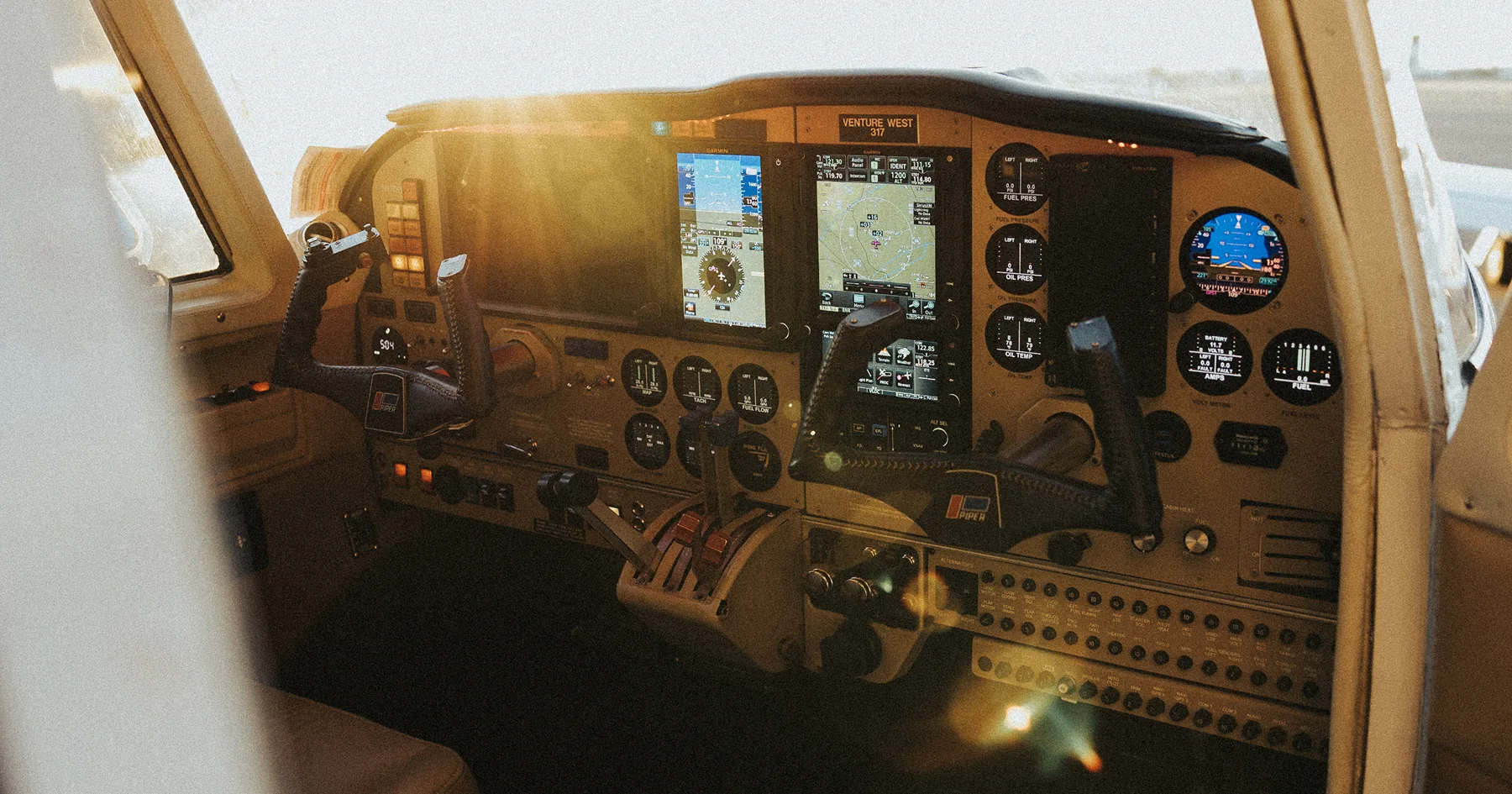
For studying the airplane, request the correct aircraft manual and checklist. Two similar-looking airplanes may have different equipment, limitations or procedures. A video about another model is not a substitute for the material your instructor assigns. At this stage your goal is recognition: learn where information lives and collect questions, rather than memorize unverified procedures.
Bring a short list of personal questions as well as aviation questions. Tell your instructor if the headset is uncomfortable, instructions are difficult to hear, or you are worried about motion sickness. Discuss these concerns on the ground. Making the learning setup comfortable and understandable gives the instructor a better starting point for your first lesson.
- Confirm the location, arrival time, required ID and headset arrangements.
- Bring assigned materials and a place to record questions.
- Ask which purchases can wait until you understand your training setup.
Read the source: FAA: Pilot’s Handbook of Aeronautical Knowledge · FAA: Airplane Flying Handbook · FAA Aeronautical Information Manual: Medical Facts for Pilots
07 / 12
Learn the rhythm of a flight lesson
A lesson should have a purpose you can explain before the engine starts. Ask what you will work on, what you should already know, and how the instructor will judge improvement. The same airplane and airport can support very different lessons. Understanding the objective makes it easier to notice the specific cues your instructor is trying to teach.
The ground portion is part of learning to fly. Preparation can include the aircraft’s condition and documents, weather, fuel, loading, performance and the plan for the lesson. Early on, the instructor will guide much of that work. Ask why a decision is being made; gradually you should be able to explain the reasoning, not merely follow the sequence.
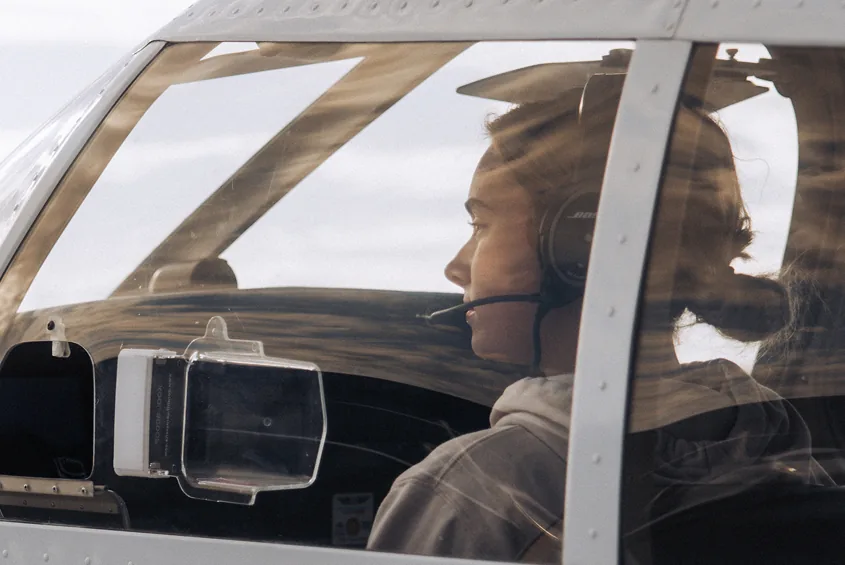
Before flying, make sure you understand how control of the aircraft will be transferred between you and the instructor. FAA instructional guidance emphasizes a clear, positive exchange of flight controls. In the air, say when you do not understand or feel overloaded, and follow the agreed procedure when the instructor takes over. You are there to learn, not to conceal uncertainty.
After the flight, leave time to discuss what happened. Identify an example of improvement, the most useful correction and the next preparation assignment. Check the training entry before you leave. A lesson is easier to build on when both people leave with the same understanding of what was accomplished and what comes next.
Read the source: FAA Aviation Instructor’s Handbook: Techniques of Flight Instruction · 14 CFR §61.51: Pilot logbooks · FAA: Private Pilot for Airplane Category Airman Certification Standards
08 / 12
Choose ground school that teaches understanding
Ground school should help you explain a decision, not just recognize a familiar answer. Start with the course your flight instructor recommends and ask how its lessons align with your flying syllabus. Use the FAA’s free Pilot’s Handbook of Aeronautical Knowledge and Airplane Flying Handbook as references alongside it. A course is more useful when you know which lesson to study next.
Before buying an online course, try a sample on a topic you do not already understand. Pause it and explain the idea without looking. Can you follow the diagrams on your phone or laptop? Does a wrong answer lead to a useful explanation? Look for clear revision dates, references and a way to ask an instructor questions. These are practical selection criteria, not an FAA endorsement of a product.
The idea, at a glance
Study to explain, then apply
- Learn
Read or watch a focused lesson.
- Recall
Explain it without looking at the answer.
- Apply
Connect it to a flight scenario and get feedback.
Ask exactly how the course handles knowledge-test authorization, what completion or instructor review it requires, and whether that service is included. Also check access length, renewals, support, practice tests, books, refunds and any separate test-center fee. A private-pilot knowledge-test authorization does not replace flight instruction, solo endorsements or practical-test readiness. Choose the course with your instructor before purchasing several overlapping subscriptions.
Build a small study loop: review the last debrief, learn one assigned topic, solve a fresh problem and bring two questions to the next lesson. Schedule the knowledge test when your instructor agrees that you understand the material; follow the FAA’s current testing instructions for identification, authorization and your Federal Tracking Number (FTN). Keep the resulting report and review deficient subject areas with your instructor.
- Content: Does the course cover your exact certificate and aircraft category, with current FAA references?
- Teaching: Can you explain a new example after the lesson, instead of repeating the practice answer?
- Support: Who answers questions, and what is the usual response process?
- Authorization: What must you finish to receive acceptable knowledge-test authorization?
- Access and cost: What expires, what is included, and what may cost extra?
- Flight connection: Which modules should you complete before your next scheduled lesson?
Read the source: FAA: Pilot’s Handbook of Aeronautical Knowledge · FAA: Airplane Flying Handbook · FAA: Private Pilot for Airplane Category Airman Certification Standards · FAA Airman Knowledge Testing Matrix, revised September 25, 2026 · FAA Airman Testing: official testing and sample-test resources
09 / 12
Turn feedback into a plan instead of a verdict
Early progress does not have to look smooth to be useful. One lesson may feel easier than the next because the task, conditions or amount of instructor assistance changed. Ask what the instructor actually observed. A statement such as “I needed reminders to complete this check” gives you something to work on; “I am bad at flying” does not.
Start the debrief with your own assessment, then compare it with the instructor’s. FAA guidance describes assessment as a way to improve learning, including learner involvement and useful, specific feedback. Make a brief record with three headings: what worked, what needs work and what to prepare. Include the lesson objective so your notes keep their context later.
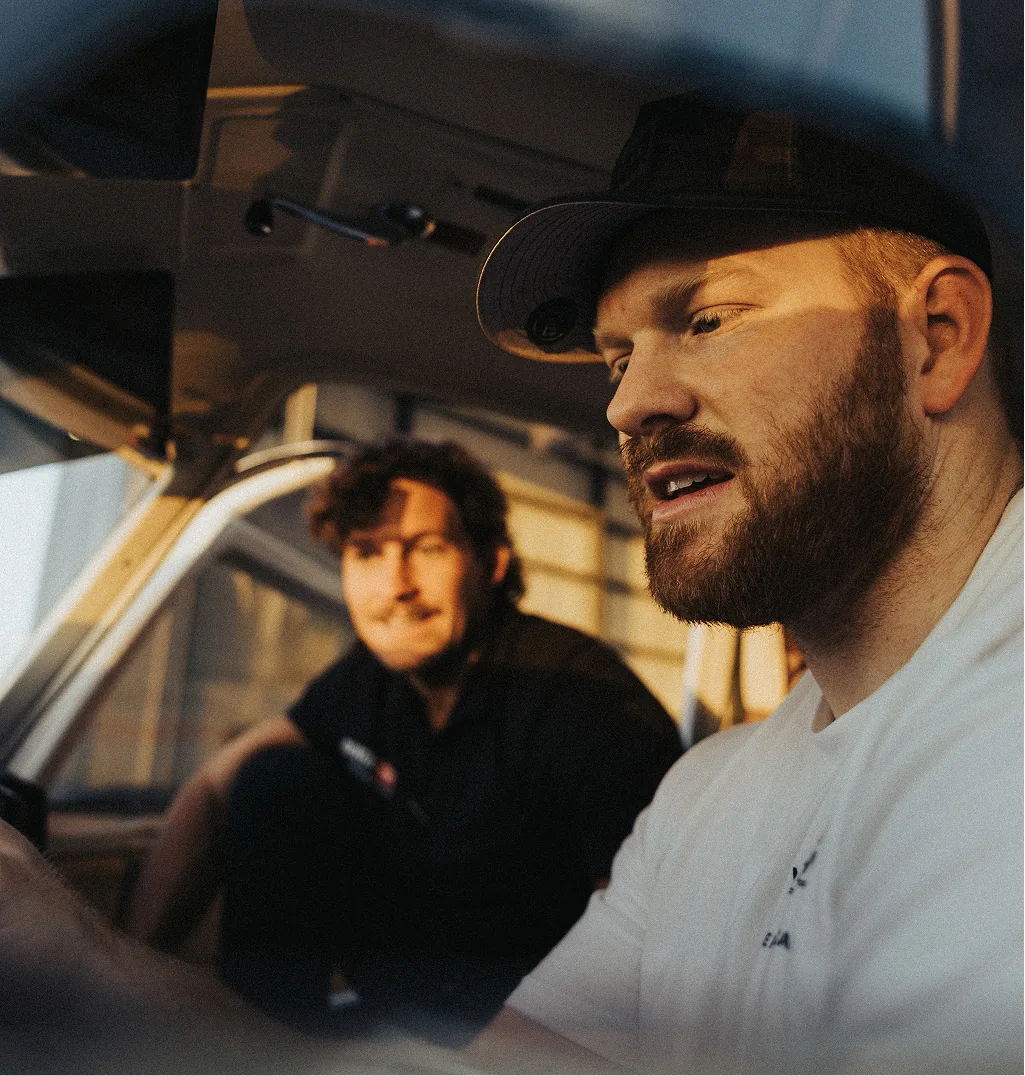
When a difficulty repeats, ask for a different explanation, a ground demonstration or a smaller component to practice. You might understand the rule but miss the cue that tells you when to apply it. Ask your instructor to distinguish a knowledge gap from a timing, coordination or workload problem; the next exercise should address the actual issue.
You should be able to raise concerns about pace, communication or scheduling respectfully. If the plan remains unclear, ask the school how it handles a progress review or instructor change. Keep existing records available so another instructor can understand your training. The goal is a workable teaching relationship and an honest next step, rather than winning an argument about an hour total.
Read the source: FAA Aviation Instructor’s Handbook: Assessment · FAA Aviation Instructor’s Handbook: Techniques of Flight Instruction
10 / 12
Include yourself and the weather in every plan
Learning to fly includes learning when to change the plan. Good visibility alone does not settle whether a lesson is appropriate. Wind, turbulence, temperature, aircraft performance, the lesson objective and your experience all matter. Ask your instructor which conditions would cause a delay, a different exercise or a ground session, and understand the school’s decision process.
In hot conditions, density altitude deserves attention. Higher density altitude can reduce aircraft performance, including takeoff and climb capability. Ask your instructor to show how the actual aircraft’s performance information applies to the day’s temperature, loading and airport. Do not replace that calculation with a universal temperature limit copied from someone else’s airplane or online discussion.
The idea, at a glance
Readiness includes the person and the plan
- You
Health, rest, stress, and readiness.
- The flight
Weather, aircraft, route, and lesson goals.
- The decision
Proceed, change the plan, or postpone.
Prepare yourself with the same honesty. The FAA’s IMSAFE prompt covers illness, medication, stress, alcohol, fatigue and emotion. Tell your instructor about an issue affecting your readiness before a lesson becomes a struggle in the cockpit. A valid medical certificate is not a guarantee that you are fit for every flight, and the rules address operating during a medical deficiency.
For a first visit, follow the school’s practical advice about water, sun protection, clothing and food. If you feel unwell during a lesson, speak up promptly. A useful response may be to change or stop the activity. Protecting a booking or a hoped-for milestone should never become the reason you hide a concern from the instructor.
Read the source: FAA Aeronautical Information Manual: Potential Flight Hazards, including density altitude · FAA Aeronautical Information Manual: Medical Facts for Pilots · 14 CFR §61.53: Operations during medical deficiency · FAA: Private Pilot for Airplane Category Airman Certification Standards
11 / 12
Treat solo as a readiness decision, not a race
There is no universal number of lessons that makes an airplane student ready for a first solo. Under §61.87, the instructor must provide the applicable training and judge satisfactory proficiency and safety. The requirements include more than takeoffs and landings. A student also needs preparation for airport operations, aircraft handling, collision avoidance and relevant abnormal or emergency situations.
Before solo, your instructor administers a pre-solo knowledge test covering applicable rules, the airport’s airspace and procedures, and the airplane’s characteristics and limitations. Incorrect answers must be reviewed. This instructor-administered test is different from the FAA private-pilot knowledge test. Ask which references to study and which areas still need work before the instructor can authorize solo.
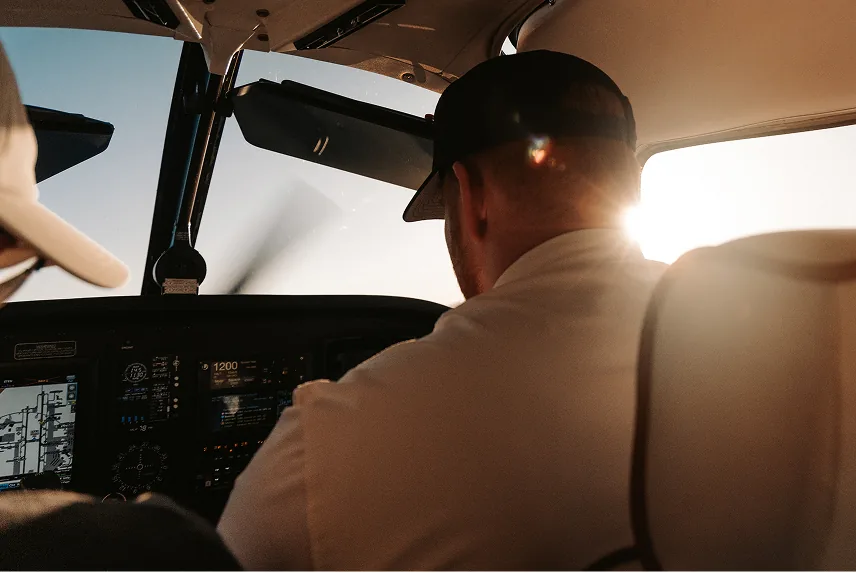
The required solo endorsement is specific to the aircraft make and model and involves a 90-day window under §61.87. Medical qualification, the student certificate and any instructor-imposed limitations also matter. Learn to check what you are authorized to do before each flight. An endorsement is not permission to ignore a weather restriction, change the plan or carry a passenger.
Solo cross-country flying has additional training, planning and endorsement requirements under §61.93. Your first local solo does not automatically authorize a trip to another airport. Ask your instructor to explain the boundary between the current authorization and the next training stage. Celebrate the milestone, then keep the same careful preparation and debriefing habits that helped you reach it.
Read the source: 14 CFR §61.87: Solo requirements for student pilots · 14 CFR §61.89: Student pilot limitations · 14 CFR §61.93: Solo cross-country requirements · FAA: Student pilot certificates
12 / 12
Build toward the checkride from the beginning
The private pilot certificate requires more than accumulated flight time. The rules include eligibility, knowledge and practical tests, required experience and instructor endorsements. The FAA’s Private Pilot Airman Certification Standards, or ACS, organize what applicants must know, the risks they must manage and the skills they must demonstrate. Ask your instructor to introduce that document early.
You do not need to perform every ACS task during your first week. Use the standards to understand the destination while your syllabus sets the next lesson. As training develops, ask how you are doing across knowledge, decision-making and flight skills. A strong practice-test score alone cannot demonstrate how you will manage an unfamiliar situation in an airplane.
The idea, at a glance
Build knowledge and skill together
- Ground knowledge
Understand and explain the underlying ideas.
- Flight proficiency
Apply them consistently in the airplane.
- Practical test
Meet the applicable standards and requirements.
Plan the testing sequence with your instructor. For the usual private-pilot path, the knowledge test must fall within the applicable 24-calendar-month period before the practical test, and checkride preparation has recency and endorsement requirements. Near that stage, review the records and logistics together: application, test report, medical qualification, aircraft documents, examiner arrangements and possible weather changes.
For now, make the first month concrete. Complete the school’s document checklist, settle the medical plan, choose a sustainable schedule, and start a simple study-and-debrief routine. After the first several lessons, ask for a progress conversation. Adjust the next month using actual experience. That is a more useful beginning than trying to promise yourself a checkride date before lesson one.
- Before starting: confirm the training goal, document checklist, medical plan and written costs.
- During the first lessons: understand the objective and keep accurate records.
- Between lessons: complete assigned study and bring specific questions.
- At the first progress review: revisit your schedule, budget and next training milestone.
Read the source: 14 CFR §61.103: Private pilot eligibility · FAA: Private Pilot for Airplane Category Airman Certification Standards · 14 CFR §61.39: Prerequisites for practical tests · 14 CFR §61.109: Required private-pilot experience
Common questions
Before you take the next step.
Do I need a student certificate before my first lesson?
No. The FAA distinguishes receiving flight instruction from flying solo. Coordinate the student-certificate application with your instructor early in training so the certificate and other required qualifications are in place before solo.
Should I finish the knowledge test before I start flying?
It is not a universal prerequisite to begin lessons. Agree with your instructor on how ground study and flight training will fit together, and plan the knowledge test around readiness and the applicable validity period. The instructor’s pre-solo knowledge test is a separate requirement.
How many lessons should I book each week?
Choose a frequency with your school that you can sustain alongside preparation, work and family commitments. Availability, weather, finances and learning needs differ. No single weekly lesson count guarantees a finish date or total cost.
What should I ask if I feel behind?
Ask which specific skill or knowledge area needs attention, what satisfactory performance looks like, and what the next lesson will do to help. Compare your progress with the training objectives and your own previous work, rather than another student’s solo date.
Can simulator practice at home count as flight time?
Do not assume it can. Training credit depends on the applicable rules, the approved device and how the session is conducted and recorded. Ask your instructor to separate any approved-device training from informal software practice.
Keep learning offline
Make a plan you can use.
Print these guides, bring them to a school visit, or work through them with your instructor.
Your next step
Let’s talk about your training.
Choose any of the optional questions above to add context to your conversation with admissions.
Discuss my training planYour selections will be added to an editable contact form. Review them there; nothing is sent until you submit it.
Go deeper
Sources & further reading
Sources checked October 13, 2026. Requirements and provider terms can change. These guides prepare you for a conversation with your instructor; use current regulations, aircraft-specific information, and an appropriate briefing for a flight.
- FAA: Pilot Schools Information faa.gov
- FAA: Beginning flight training faa.gov
- FAA: Student pilot certificates faa.gov
- 14 CFR §61.83: Student pilot eligibility ecfr.gov
- 14 CFR §61.103: Private pilot eligibility ecfr.gov
- 14 CFR §61.51: Pilot logbooks ecfr.gov
- 14 CFR §61.23: Medical certificate requirements ecfr.gov
- FAA: When a medical certificate is needed faa.gov
- FAA: AME Guide — Know Before You Go faa.gov
- FAA: Medical Certification faa.gov
- 49 CFR Part 1552: Flight Training Security Program ecfr.gov
- TSA: Flight Training Security Program portal fts.tsa.dhs.gov
- 14 CFR §61.109: Required private-pilot experience ecfr.gov
- FAA: Pilot’s Handbook of Aeronautical Knowledge faa.gov
- FAA: Airplane Flying Handbook faa.gov
- FAA Aviation Instructor’s Handbook: Techniques of Flight Instruction faa.gov
- FAA Aviation Instructor’s Handbook: Assessment faa.gov
- FAA Aeronautical Information Manual: Potential Flight Hazards, including density altitude faa.gov
- FAA Aeronautical Information Manual: Medical Facts for Pilots faa.gov
- 14 CFR §61.53: Operations during medical deficiency ecfr.gov
- 14 CFR §61.87: Solo requirements for student pilots ecfr.gov
- 14 CFR §61.89: Student pilot limitations ecfr.gov
- 14 CFR §61.93: Solo cross-country requirements ecfr.gov
- FAA: Private Pilot for Airplane Category Airman Certification Standards faa.gov
- 14 CFR §61.39: Prerequisites for practical tests ecfr.gov
- FAA Airman Knowledge Testing Matrix, revised September 25, 2026 faa.gov
- FAA Airman Testing: official testing and sample-test resources faa.gov