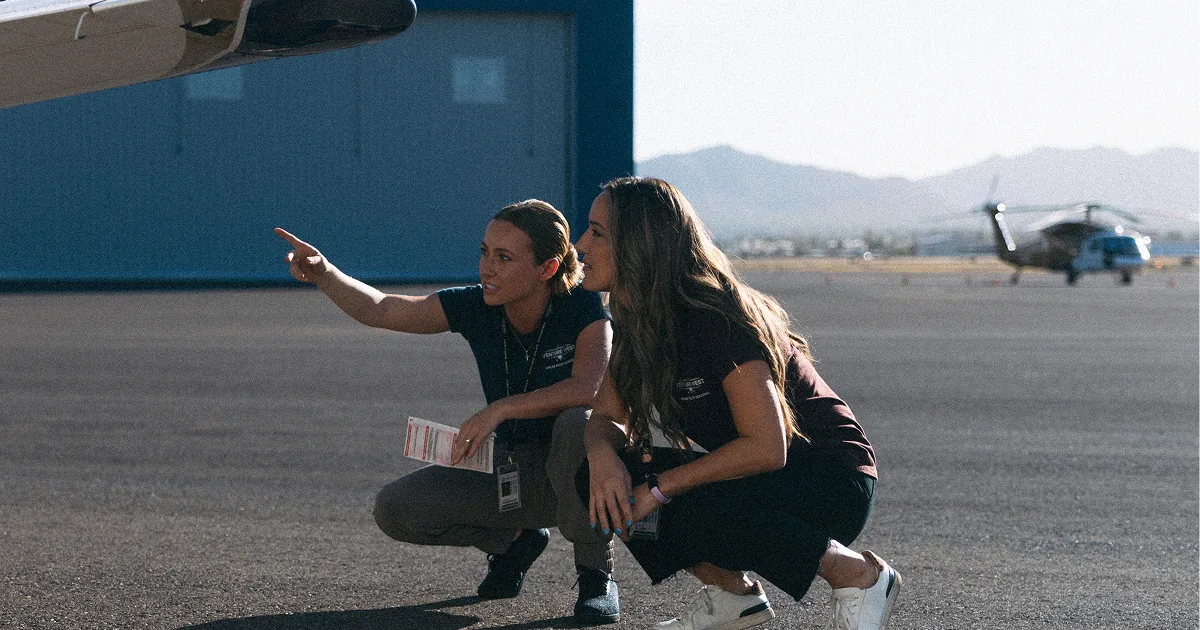
Credit for PPL: Pick Up Where You Left Off
Already hold your Private Pilot Certificate? Skip ahead and complete your airline career training in 8–10 months with our accelerated program.
PROGRAM OVERVIEW
The Credit for PPL program is built for pilots who have already earned their Private Pilot Certificate and are ready to continue their journey toward the airlines. You'll pick up right where you left off — no repeating what you've already accomplished.
Over the course of 8 to 10 months, you'll progress through five structured training phases — earning your Instrument Rating, Commercial Pilot Certificate, CFI, CFII, and Commercial Multi-Engine Add-On — completing the full certificate stack airlines require.
Your existing PPL flight hours count toward your total time requirements, giving you a meaningful head start on Commercial Pilot Certificate hour minimums. Training takes place at Falcon Field Airport (KFFZ) in Mesa, Arizona — one of the best VFR training environments in the country. Plan lessons around current weather, heat, and aircraft performance.
WHO THIS PROGRAM IS FOR
- Private Pilot Certificate holders ready for the next step
- PPL holders from any flight school or aircraft type
- Pilots looking for a structured, accelerated airline career path
- Career changers who earned their PPL recreationally
- Anyone committed to full-time professional pilot training
YOUR PPL HOURS WORK FOR YOU
Every hour you've logged as a Private Pilot counts toward your Commercial Pilot Certificate total time requirements. The FAA requires 250 total flight hours for commercial — your PPL time (typically 50–80 hours) gives you a significant head start, potentially shortening your commercial phase. We'll review your logbook during enrollment to map out exactly where you stand.
WHAT'S INCLUDED
Five certificates and ratings, completed in sequence, building progressively from your PPL toward your airline career.
Instrument Rating (IR)
Master flying solely by reference to instruments. This rating is critical for real-world airline operations and trains you to navigate in clouds, low visibility, and adverse weather using precision approaches and instrument navigation.
Commercial Pilot Certificate
Elevate your skills to professional standards. Commercial training focuses on precision maneuvers, complex aircraft operations, and the aeronautical decision-making expected of a professional pilot. This certificate allows you to be paid to fly.
Certified Flight Instructor (CFI)
Learn to teach others to fly. Becoming a CFI deepens your understanding of aerodynamics, regulations, and flight maneuvers while developing the communication and leadership skills airlines value. Many students build flight hours as instructors right here at Venture West.
Certified Flight Instructor — Instrument (CFII)
Expand your teaching credentials to include instrument instruction. As a CFII, you can train students for their instrument rating, giving you more teaching opportunities and accelerating your hour-building toward the airlines.
Commercial Multi-Engine Add-On
Train in multi-engine aircraft to complete your academy certificate and rating sequence. Multi-engine experience is essential for airline hiring. You'll learn engine-out procedures, Vmc maneuvers, and multi-engine aerodynamics in our Piper Twin Comanche.
TRAINING TIMELINE
A training sequence from Instrument Rating through instructor and multi-engine training. Your PPL gives you a head start; airline qualification requires additional experience and requirements.
- Phase01IR
Instrument Rating
- IFR cross-country
- Simulated IMC training
- IR checkride
- Phase02CRM
Crew Resource Mgmt
- Multi-crew ops
- SOP training
- CRM completion
- Phase03CPL
Commercial Certificate
- Complex endorsement
- Commercial maneuvers
- CPL checkride
- Phase04CFI
Flight Instructor
- FOI written exam
- Spin endorsement
- CFI checkride
- Phase05CFII
Instrument Instructor
- CFII preparation
- CFII checkride
- Begin hour-building
- Phase06ME
Multi-Engine Add-On
- Multi-engine training
- ME checkride
- Plan your next training step
BUILD HOURS & BEGIN YOUR
After earning all five certificates, most graduates build flight hours as a CFI — often right here at Venture West. Your existing PPL hours plus training hours give you a head start toward the FAA's 1,500-hour ATP minimums required for airline hiring.
FREQUENTLY ASKED QUESTIONS
No. Graduates of Venture West’s Airline Pilot Academy (including Credit for PPL) or Pinnacle Pathway who hold both CFI and CFII are offered a post-graduation interview with Venture West. This is not a job offer; employment and interviews with other employers are not promised.
The Credit for PPL program is identical to our Airline Pilot Academy minus the Private Pilot Certificate phase. Since you already hold your PPL, you skip directly to Instrument Rating and continue through all remaining certificates. You follow the same structured curriculum for the remaining certificates and ratings.
The program takes approximately 8 to 10 months of full-time training, depending on your schedule, weather, and individual progress. This is roughly 2–4 months shorter than the full Airline Pilot Academy since your PPL phase is already complete.
You will earn five certificates and ratings: Instrument Rating, Commercial Pilot Certificate, Certified Flight Instructor (CFI), Certified Flight Instructor — Instrument (CFII), and Commercial Multi-Engine Add-On.
Yes. Your logged PPL flight hours count toward the total time requirements for subsequent certificates. For example, the Commercial Pilot Certificate requires 250 total flight hours — your existing PPL time contributes directly to that total, potentially accelerating your commercial training.
That's no problem. Many of our Credit for PPL students trained at other schools or in different aircraft types (including Cessnas). We'll conduct a brief evaluation flight to assess your current skill level and familiarize you with your training aircraft before starting instrument training.
We offer flexible start dates for Credit for PPL students. Since you're not starting from scratch, we can typically integrate you into the program more quickly. Contact us to discuss available start dates that work with your schedule.
Yes. We offer financing options to help cover the cost of training. Veterans may also be eligible for VA education benefits through our affiliated college degree pathway. Visit our Financing page for details.
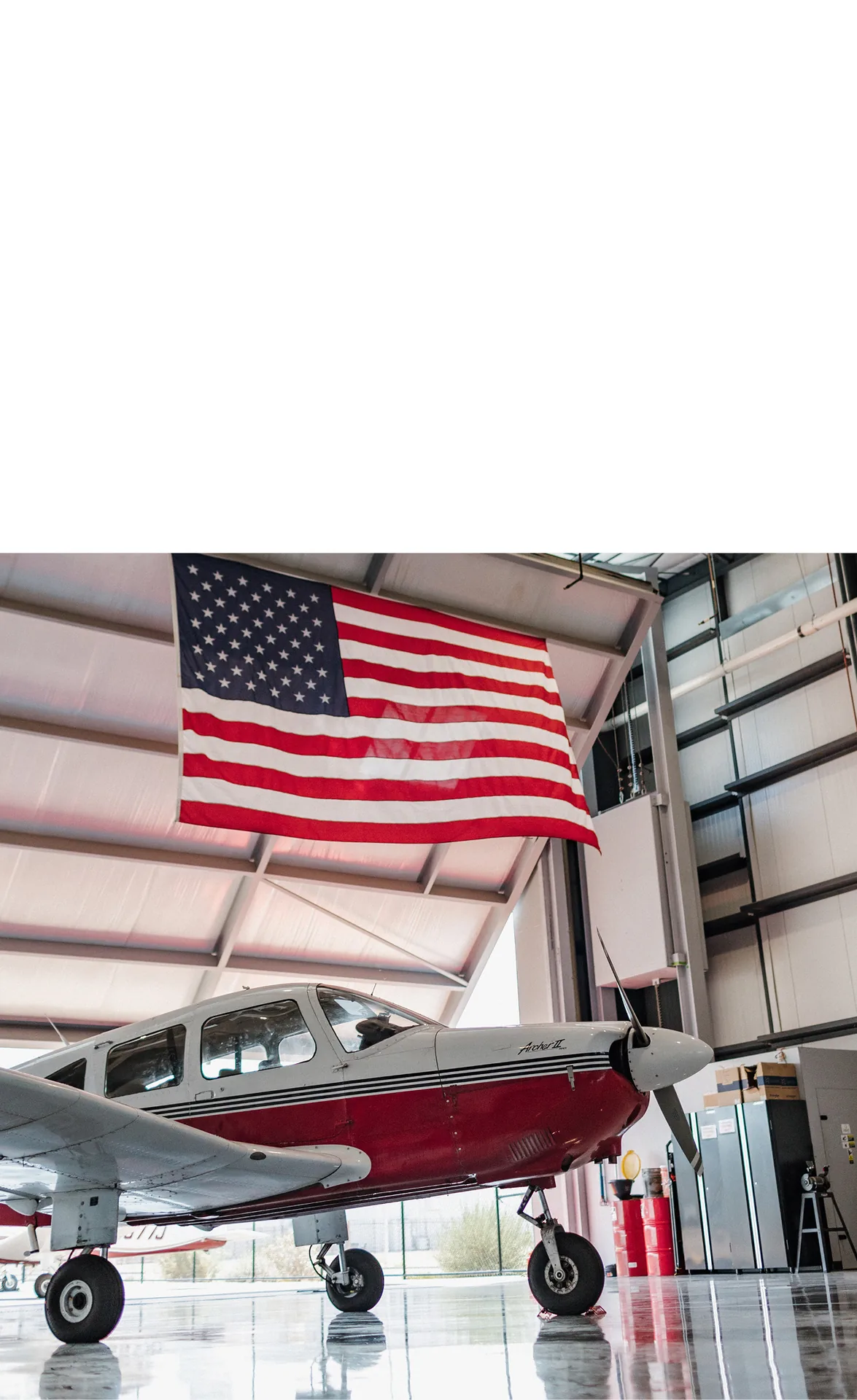
Our training fleet includes Piper Archers, Tecnam aircraft and a Piper Twin Comanche. Confirm the aircraft for your training plan with admissions.